Planning a new patio comes down to one big decision early on: brick pavers or poured concrete. Both are proven, popular choices, and both can hold up in a Michigan backyard, but they behave very differently once winter, budget, and long-term maintenance enter the picture. This guide breaks down the brick pavers vs. concrete patio question so you can figure out which is the best patio material for your Michigan property before you commit.
What Makes Brick Pavers Different
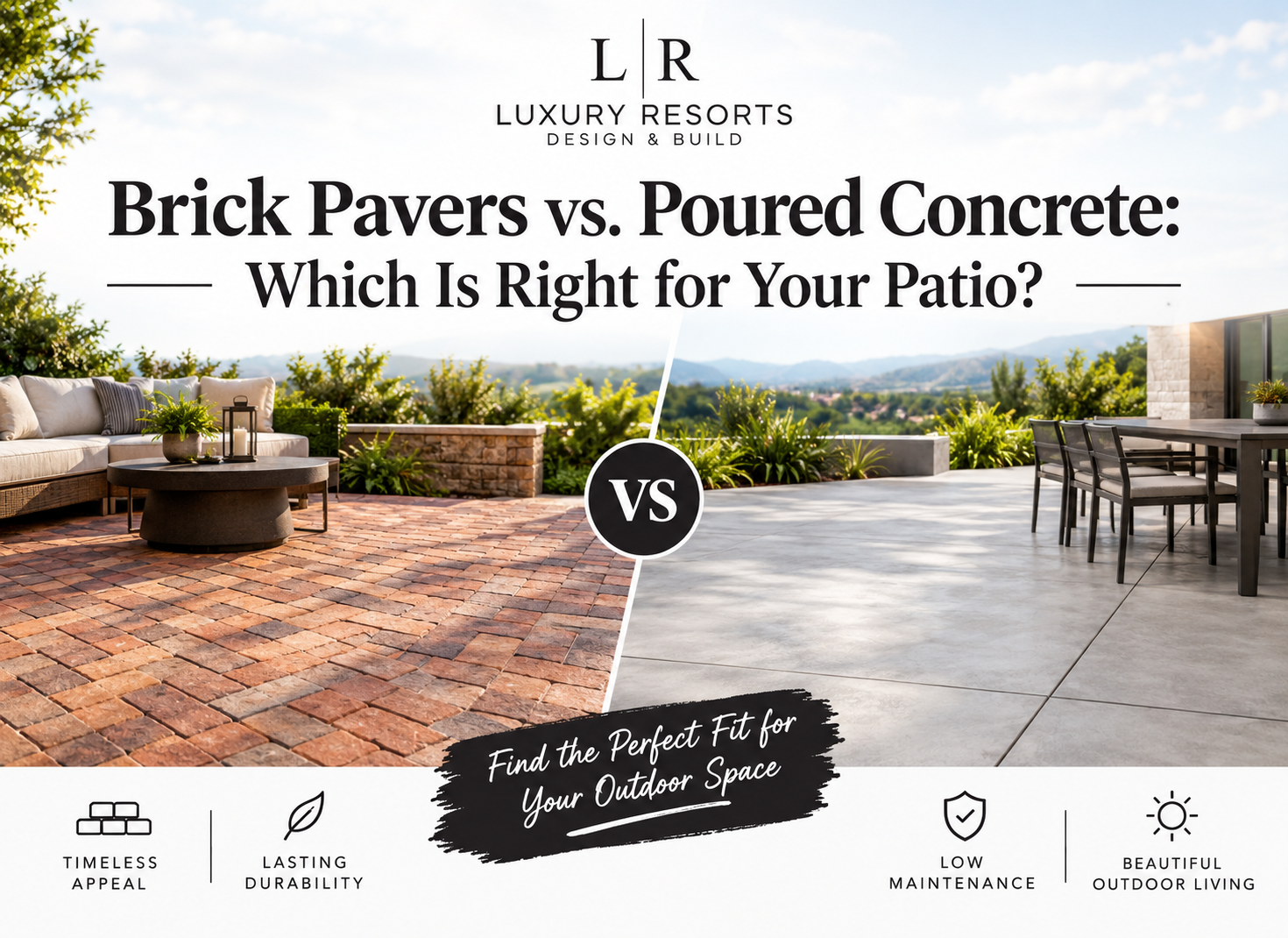
Brick pavers are made from clay and aggregate stone, individual units set in a pattern rather than poured as one continuous slab. That construction gives them a few advantages right out of the gate. Because they’re installed piece by piece, brick pavers have natural joints that flex slightly with ground movement, which matters a lot in a climate that goes through repeated freeze-thaw cycles every winter. They’re available in a range of colors and textures, so a patio can be tailored to match a home’s existing brick, stone, or exterior palette, and they’re a natural fit for walkways, patios, and driveways alike. Brick pavers aren’t maintenance-free, though. Plan on sealing them every so often so the color doesn’t fade over time. It’s a small, recurring task rather than anything that eats up a weekend.
What Makes Poured Concrete Different
Pour it once, and you’ve got a single, seamless surface, and a lot of homeowners like that cleaner look better than the segmented pattern pavers give you. Concrete holds up well, doesn’t ask for much upkeep, and tends to cost less than pavers, which is a big reason it shows up so often on driveways, patios, sidewalks, and pool decks. There’s also more than one way to finish it depending on the look you’re after. Flatwork gives a smooth, classic surface, stamped concrete can mimic the look of stone or brick at a lower cost, and exposed aggregate creates a unique, slip-resistant texture that works well around pools and walkways. Because it’s poured as one piece, though, a concrete patio doesn’t have the same built-in flexibility that pavers do, which is worth keeping in mind for a region with harsh winters.
Durability and How Each Handles Michigan Winters
This is where the comparison really matters for local homeowners. Michigan’s freeze-thaw cycles put real stress on any outdoor surface, and the two materials respond to that stress differently. Brick pavers are installed with joints between each unit, so as the ground shifts slightly with frost, the pavers can move with it rather than against it. If a paver does eventually crack or become damaged, it can typically be replaced on its own without disturbing the rest of the patio, which keeps repairs small and contained rather than turning into a bigger project. Poured concrete, being a single slab, doesn’t have that same give. Over time, freeze-thaw cycles can lead to cracking, and because it’s one continuous surface, a crack in one section is visible across the whole patio rather than contained to a single unit. That doesn’t mean concrete can’t perform well in Michigan; it’s used successfully in driveways, patios, and pool decks across the state, but it’s a real trade-off worth weighing against the segmented, more forgiving nature of pavers.
Cost and Long-Term Maintenance
Upfront, concrete usually wins on price. That’s a big part of why so many residential and commercial properties go with it. Day-to-day, it doesn’t ask for much either, just an occasional sealing to protect stamped or decorative finishes, and its low-maintenance nature is one of the main reasons homeowners choose it for driveways, sidewalks, and pool decks in addition to patios. Brick pavers typically involve a higher upfront investment given the labor of installing individual units, but they offer an advantage in repair costs down the line: replacing a damaged paver is a smaller, more contained job than repairing or replacing a section of a poured slab. Over the life of a patio, that difference in repair flexibility is often what tips the decision for homeowners planning to stay in their home long-term, since a patio that lasts decades will almost certainly need some kind of touch-up along the way.
Style and Design Flexibility
If a custom look is a priority, brick pavers offer more design flexibility. Their range of colors, textures, and pattern options makes it easier to create a patio that complements an existing home’s architecture, and they pair naturally with other paver types like natural stone, bluestone, or cobblestone for a layered, high-end look. That said, concrete doesn’t have to mean a plain gray slab. Stamped or decorative finishes can pass for brick or stone at a different price point, and exposed aggregate gives you a textured look pavers just can’t match. If you like the durability of concrete but want more visual interest, a decorative or stamped finish is worth a look before you write concrete off on looks alone.
So Which Should You Choose?
Honestly, it depends on what matters most to you. If you want a surface that flexes with freeze-thaw cycles, repairs that don’t turn into a whole-patio job, and more room to play with design, go with brick pavers. If keeping the upfront cost down and having one clean, low-maintenance surface is the priority, poured concrete is a solid, proven choice. Many patios also combine the two, using concrete as a cost-effective base area and brick pavers as a border or accent, which can be worth discussing with a design team before finalizing a plan. Walking the property with a designer who understands both materials is often the fastest way to land on a decision that fits the budget, the climate, and the way the space will actually be used.
Get Expert Guidance from Luxury Resorts Design & Build
Luxury Resorts Design & Build is a family-owned, Michigan-licensed builder with more than 30 years of experience designing and building custom outdoor spaces across the state. From brick paver installation and repair to custom concrete flatwork and decorative finishes, our team handles every material option under one roof, backed by 3D design and architectural planning plus a 3-year hardscape warranty on completed work. Whether you’re leaning toward pavers, concrete, or a combination of both, we’ll walk you through the trade-offs specific to your property and your vision and help you land on a patio material that’s built to last through Michigan’s changing seasons.
Not sure which material is right for your patio? Contact us today for a consultation with Luxury Resorts Design & Build and start planning your outdoor space.